
Land Acknowledgment
While museums are among the most trusted institutions, Four Mile staff aren’t the sole keepers of truth and warmly invite community members and organizations to use the Park as a space to share their stories and shape new history.
Statement of Land Acknowledgement
North America has been home to Indigenous peoples since time immemorial. At least 48 tribal nations have lived in the Denver area, and the Hinono’ei (or Arapaho), Tsistsistas (or Cheyenne), and Nuche (or Ute) peoples are some of the most recent traditional residents of the unceded land now called Denver, Colorado. Four Mile Historic Park honors the Indigenous peoples and Latino/Chicano/Hispanic peoples who have stewarded this land and recognizes their ongoing contributions and presence in this community. Acknowledging these truths is only one step of many that Four Mile is taking to honor and uplift enduring Indigenous populations while acknowledging the privilege it is to operate here today. This living document serves not just as recognition, but as a guiding document for decision-making, communication, and education moving forward.
Euro-Americans settled this land in direct violation of the Fort Laramie Treaty of 1851 (Horse Creek Treaty), which allowed non-Indigenous peoples to pass through but not settle the land now known as Colorado. The Pike’s Peak Gold Rush attracted tens of thousands of non-Indigenous settlers to the area, interrupting Indigenous lifeways and forcing people off of the land they had been stewarding for generations. Once the presence of gold in the Rocky Mountains was widely known, the 1861 Treaty of Fort Wise “legalized” non-Indigenous settlement so that settlers could profit from the extraction of the region’s resources, and forcibly relocated the Cheyenne and Arapaho peoples to land in eastern Colorado that was perceived by colonizing forces to be less valuable. Three years later, the territorial governor of Colorado, John Evans, perpetrated the Sand Creek Massacre against those forcibly displaced people. Meanwhile, self-described “settlers” continued to flock to this area, and still do to this day.
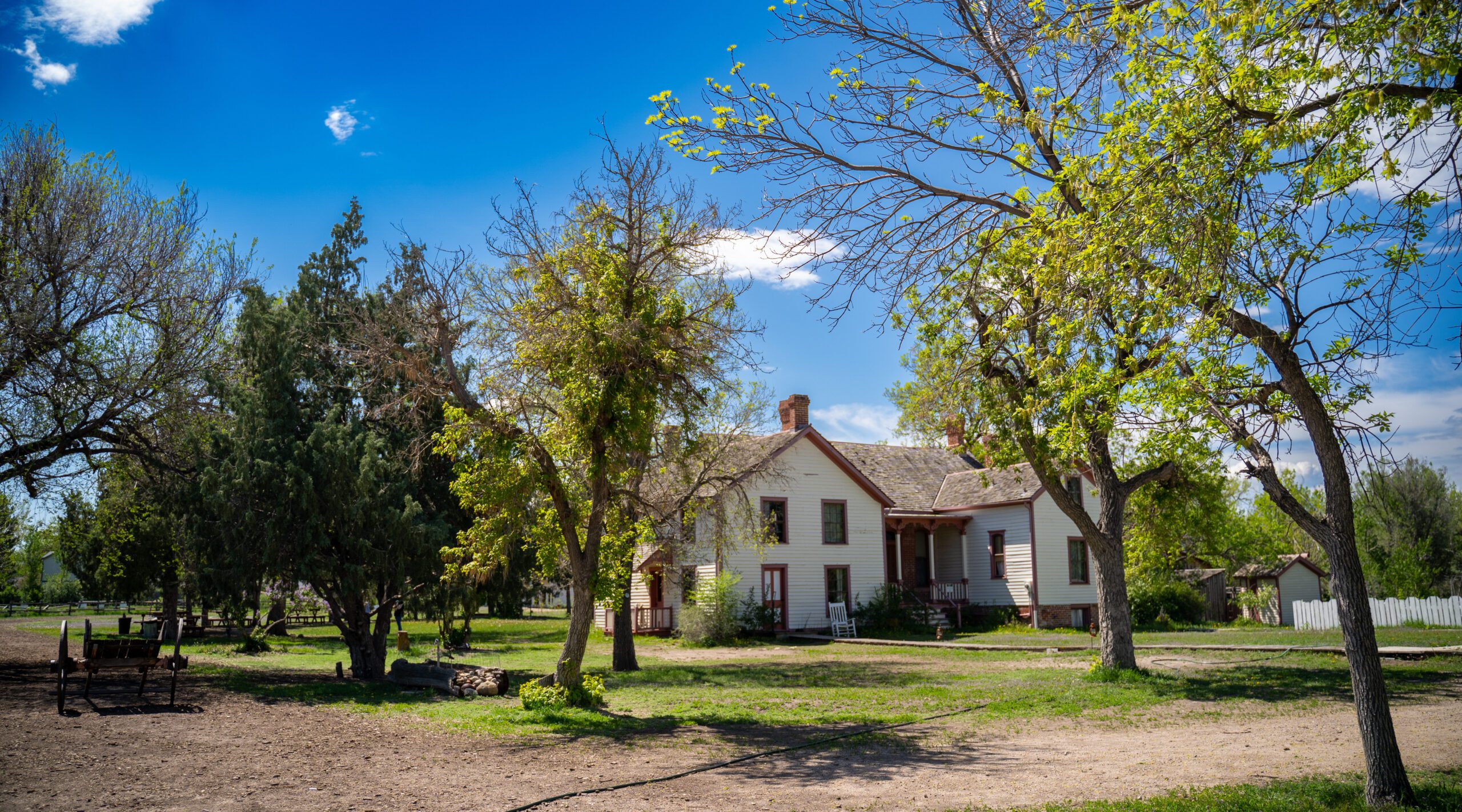
Since their arrival, the white settlers of this area have been at odds with the presence and practices of Indigenous peoples. The Brantner Brothers, who built the historic Four Mile House in 1859, and Mary Cawker, who took over the house in 1860 and ran it as a stagecoach stop, did so in violation of treaties between Indigenous nations and the United States government.
Four Mile Historic Park, Inc. was established in 1977 in order to steward public access to the historic house and the surrounding 12 acres. From its origin, it has portrayed the history of a narrow group of Coloradans, from the perspective of white Americans. Four Mile has focused on and glorified the pioneer figure, falling in line with many other museums which represent the colonization of the country inside and outside of museums with images of “intrepid white men who bravely conquered the Wild West.” This perspective validated the ongoing nature of settler colonialism and Indigenous genocide and portrays almost exclusively a view of history that has been at odds with the presence, history, and experiences of Indigenous peoples.
To begin efforts toward remedying these practices, Four Mile retired the use of the terms “pioneer” and “frontier” in 2021 due to their racial connotations. Four Mile continues auditing educational, programming, and event materials to share a more intellectually honest interpretation of the history of the Four Mile House. While we will continue to talk about the three families who historically owned what is now the oldest standing house in Denver, we are also eagerly expanding our scope to host and amplify the stories of the many diverse figures who have lived in this region and support Indigenous sovereignty, community events, and economic development initiatives through both internal programs and partnerships with Indigenous organizations. As a part of the DEIA (Diversity, Equity, Inclusion, and Accessibility) statement adopted in the Spring of 2024, Four Mile named some of its priorities as preserving and uplifting Indigenous history, expanding history and storytelling, expanding our land acknowledgment, and holding ourselves accountable to setting and achieving ambitious DEIA goals that span the entire organization. To be clear, the past isn’t changing; the breadth of history and interpretation of events that Four Mile presents to the public is changing.
As Four Mile Historic Park works to broaden the stories we share, we acknowledge that the land we occupy is unceded Indigenous territory. We recognize that, historically, we have contributed to narratives that overlooked the deep history and presence of Indigenous peoples and the painful legacy of dispossession. We are committed to learning, listening, and evolving as we strive to do better.
See What’s Next at Four Mile
Discover Four Mile’s past, present, and future at upcoming events
Get More from Four Mile
Members save on all events, programs, and classes at Four Mile